
A New Model for Pediatric Discovery
Long before Adam Resnick, PhD, and Phillip “Jay” Storm, MD, became co-founders and Co-Executive Directors of the Center for Data-Driven Discovery in Biomedicine (D3b), they saw an opportunity to change how pediatric brain tumor research was conducted.
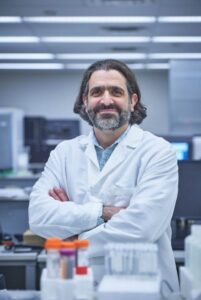
Co-Executive Director, D3b
Tissue banking was not new. Both Dr. Storm and Dr. Resnick had worked in environments where tumors were collected for research, but those efforts typically focused on a particular disease or scientific question. Samples not tied to an active study were often discarded once they were no longer needed for clinical care.
Together, they saw an opportunity to think bigger: preserve and deeply characterize every tumor that could ethically and appropriately be collected, not only those already connected to a specific study. What began with weekly handoffs of brain tumor tissue from the operating room grew into a larger conviction: building a connected resource around human tissue could open new paths to discovery across diseases and organ systems.
That conviction became the foundation for D3b. In 2016, Dr. Resnick and Dr. Storm joined with Jena Lilly, MS, co-founder and Executive Director of Research Operations and Strategic Planning, to build a research center that connects patient samples, data, technology, clinical insight, and people around one mission: accelerating pediatric discovery and bringing its benefits closer to children and families.
As D3b marks its 10th anniversary, a Decade of Daring celebrates the determination to challenge how research had traditionally been done, the model D3b pioneered, and the new possibilities that model continues to create.
Turning Connection Into a Real Research Advantage
The D3b founders saw a field on the cusp of new possibilities. Sequencing was becoming more powerful and affordable, while cloud computing offered new ways to manage and analyze vast amounts of information. Paired with a collaborative research model, these advances could bring rare patient samples, diverse expertise, and institutions together around shared scientific questions.
As the Center grew, another experience showed Dr. Resnick how much more could be discovered when scientific information is connected. At the University of Pennsylvania, his team was studying pediatric brain tumors. One floor below, another lab was investigating fibrodysplasia ossificans progressiva (FOP), a rare condition that causes bone to form in muscles and other soft tissues. The two labs were examining some of the same genetic changes, but no shared system existed to reveal the connection.
“Local proximity didn’t overcome the need for data connectivity,” Dr. Resnick explained.
D3b made that connectivity central to its scientific approach. Early work through the Children’s Brain Tumor Network, a D3b program that connects researchers worldwide to pediatric brain tumor data, samples, and resources, demonstrated how institutions could collaborate to pursue important questions across hospitals and fields of study.
The Center’s name itself reflected its broader ambition: to build a model for data-driven discovery that could extend beyond pediatric brain tumors to encompass a vast range of health conditions, institutions, partnerships, and stages of life.
M3: Setting a New Standard for Pediatric Discovery
That vision took shape in the D3b M3 approach: multimodal, multiomic, and multidisciplinary discovery. Pioneered by D3b, the approach is now being adopted by leading research institutions worldwide.
In simple terms, M3 brings together many types of information, layers of biology, and areas of expertise to give researchers a more complete understanding of disease. A surgeon may study medical images, a pathologist may examine tissue, and a genetic researcher may analyze DNA. Each sees something important. M3 connects those perspectives and the people who understand them, so each can help inform the others.
Dr. Resnick compares it to photographing the same scene from different angles. One image captures only part of what’s happening. Viewed together, multiple perspectives reveal more, and point toward discoveries that might otherwise remain out of view.
By creating these connections, M3 expands what researchers can see, the questions they can ask, and how quickly new knowledge can be translated into patient care. It also established the foundation artificial intelligence (AI) needs to contribute meaningfully: connected, well-organized information understood within the right scientific and clinical context.
“The same thing that humans need to get enabled is what artificial intelligence needs to get enabled,” Dr. Resnick said.
D3b’s first decade established a new approach to discovery and created the tools, partnerships, and culture to put it into practice. As this model gains influence around the world, D3b is advancing its next frontier: bringing shared knowledge closer to the moment a child needs it.
Bringing Discovery Closer to Care
For Storm, the traditional boundary between research and clinical care is increasingly disappearing as information generated through care helps fuel discovery, and new knowledge returns more quickly to patients.
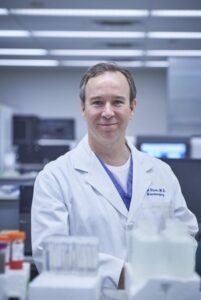
Co-Executive Director, D3b; Chief, Division of Neurosurgery, CHOP
“What we’re building is a model where every patient can help us learn, and what we learn can come back faster to help the next child,” Storm said.
This vision is of a system that learns from every patient and applies that knowledge more quickly to help guide care. It could enable faster, more precise diagnoses; detect signs of recurrence earlier; inform treatment decisions with insights from similar patients, and connect more children to clinical trials closer to home.
Over time, connecting genetic data, medical images, health records, and long-term health information could help identify risks sooner, improve monitoring, and even create opportunities to prevent some diseases.
For families, this could mean fewer delays, better-informed choices, and greater confidence that every possible path has been considered.
Parents often carry the burden of wondering whether they found the right option at the right time. Dr. Resnick hopes the D3b model can help families and clinicians trust that the system is continually learning and moving as quickly as possible for each child.
That future will continue to depend on the people who turn an ambitious approach to research-informed care into daily action.
“D3b has been the most rewarding thing I’ve done,” Dr. Storm said, “You change the world with a bunch of people who actually care deeply about a cause.”
Ten years ago, D3b dared to imagine a pediatric research model built around connection, urgency, and a shared mission. Its first decade transformed that idea into a platform for discovery at its operations center at the Children’s Hospital of Philadelphia (CHOP) and now worldwide. This next decade begins with the same determination: move discovery closer to care, bring more children within reach of opportunity, and continue changing what the field believes is possible.
Follow the Decade of D3b blog series as we explore how one approach is creating many paths to discovery.