
Decade of Difference: One Model. New Frontiers.
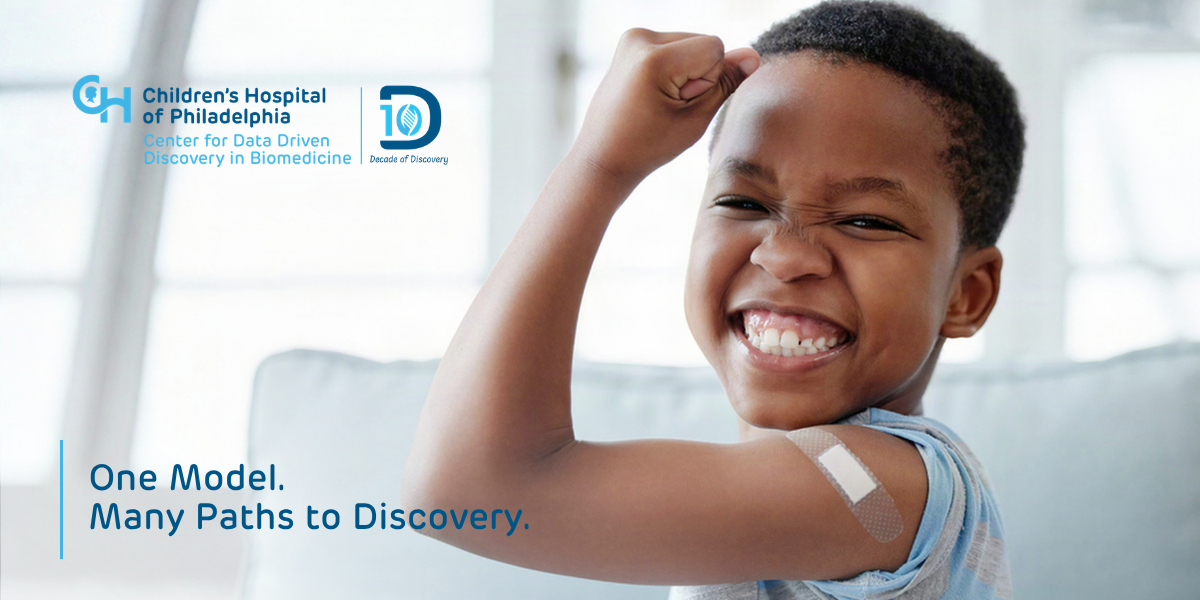
A research program built around pediatric brain tumors looks very different from one focused on congenital disorders, epilepsy, or a rare cancer. The patients are different. The scientific questions are different. So are the data, partners, and resources needed to move the work forward.
Over the past decade, the Center for Data-Driven Discovery in Biomedicine (D3b) has built an approach that adapts to new research challenges. What began with the Children’s Brain Tumor Network (CBTN) has grown into 10 robust programs spanning childhood conditions, institutions, research communities, and emerging technologies. Each draws on a shared foundation of collaboration, data, biospecimens, technology, and expertise.
From One Research Challenge to the Next
CBTN provided an early proving ground. Pediatric brain tumors are rare and diverse, so answering larger research questions requires hospitals to work together and share patient samples, clinical information, data, and expertise. That experience helped D3b learn how to bring many institutions and disciplines around a common research goal.
The Gabriella Miller Kids First Data Resource Center (Kids First DRC) carried those lessons into a much broader setting. Supported by the National Institutes of Health, Kids First DRC brings genomic and clinical data together across childhood cancers and congenital disorders, giving researchers opportunities to ask questions across diseases and datasets. RADIANT PCX marks D3b’s next leap forward, building on a decade of expertise in connecting data to accelerate discovery and bring research insights into care through AI.
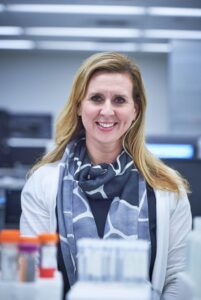
Executive Director of Research Operations and Strategic Planning, D3b
“Bringing people and data together is only the beginning,” said Jena Lilly, MS, D3b Co-Founder and Executive Director of Research Operations and Strategic Planning. “The real work is making that collaboration productive: aligning priorities, earning trust, and giving researchers what they need to move discovery forward.”
Adapting to the Research in Front of Us
D3b’s role changes depending on what a research community needs. For CORSICA, that means supporting a focused registry for a rare cancer. Through the Chordoma Foundation Bank, D3b brings its experience to an outside rare-disease organization. The Philadelphia Coalition for a Cure calls for something different again: helping institutions across one region work toward shared research goals.
What connects these efforts is the foundation underneath them. D3b can bring together institutions, patient samples, clinical and genomic data, technology, and research expertise, then shape those capabilities around the question at hand. That gives each new effort a stronger starting point without forcing every program into the same mold.
A Stronger Starting Point
Before researchers can answer a scientific question, they often need to build the conditions for discovery. Institutions need ways to collaborate. Patient information and samples need to be collected and organized. Partners need shared priorities and clear processes.
D3b brings a decade of experience building that foundation. Researchers taking on a new challenge can draw on established relationships, tools, and expertise while developing the science their community needs.
That stronger starting point matters in pediatric and rare disease research, where patient populations are small, and families are waiting for answers. Each initiative also contributes knowledge and capabilities that can support the next.
D3b’s next decade will bring new research challenges. Its strength lies in bringing an expanding foundation of experience to each one, helping researchers move from building the infrastructure to pursuing discovery.
After a decade, D3b’s portfolio tells a larger story than the success of any one initiative. It shows that a way of working first developed for one difficult problem can keep evolving as the disease, partners, technology, and questions change.
The next challenge will be different, too. D3b will meet it with a decade of experience and a stronger starting point.
Follow the Decade of D3b series as we continue exploring the infrastructure and discoveries behind 10 years of progress in pediatric research.